Entertainment
OtakuBroz: The Ultimate Guide to the Popular Anime and Manga Community in 2026


Anime and manga have become a global phenomenon, attracting millions of passionate fans across every continent. As the popularity of Japanese entertainment continues to rise, communities dedicated to anime culture have become increasingly important. OtakuBroz has emerged as a recognizable name among anime enthusiasts, offering fans a place to discover trending series, discuss favorite characters, explore manga recommendations, and stay updated with the latest developments in the anime world.
Whether you are a newcomer to anime or a long-time otaku, understanding what OtakuBroz offers can help you maximize your experience within the ever-expanding anime community. This comprehensive guide explores everything you need to know about OtakuBroz, including its features, benefits, community, content, and why it continues to attract anime lovers worldwide.
What Is OtakuBroz?
OtakuBroz is an online platform and community centered around anime, manga, gaming, Japanese pop culture, and fandom discussions. It brings together enthusiasts who share a common passion for Japanese entertainment and provides a space where users can exchange recommendations, reviews, theories, fan art, and industry news.
Unlike traditional entertainment websites that simply publish articles, OtakuBroz focuses on creating a community-driven environment where members actively participate in conversations surrounding their favorite anime and manga titles.
The platform appeals to various audiences, including:
- Anime beginners
- Experienced anime fans
- Manga collectors
- Cosplayers
- Light novel readers
- Japanese culture enthusiasts
- Gaming communities
- Fan artists and creators
Its growing popularity reflects the increasing demand for dedicated anime communities that offer both entertainment and meaningful engagement.
Why OtakuBroz Has Become Popular
The success of OtakuBroz is built on several factors that distinguish it from many other anime-focused websites.
Comprehensive Anime Coverage
Users can find information on virtually every anime genre, including:
- Action
- Adventure
- Fantasy
- Romance
- Slice of Life
- Comedy
- Horror
- Mystery
- Sci-Fi
- Sports
- Psychological
- Isekai
This broad coverage ensures that fans of every preference can discover something new.
Strong Community Interaction
One of the defining strengths of OtakuBroz is its emphasis on community engagement. Members frequently participate in:
- Anime discussions
- Episode reviews
- Character rankings
- Fan theories
- Recommendation threads
- Seasonal anime predictions
These discussions help create an active and welcoming environment for anime enthusiasts worldwide.
Regular Content Updates
Anime evolves quickly, with new episodes, manga chapters, announcements, trailers, and adaptations appearing almost daily. OtakuBroz keeps users informed with regular updates covering:
- Seasonal anime releases
- Upcoming manga adaptations
- Studio announcements
- Voice actor news
- Anime movie releases
- Convention updates
Timely information helps users stay connected with the latest industry developments.
Features That Make OtakuBroz Stand Out
Several features contribute to the growing popularity of OtakuBroz among anime fans.
Detailed Anime Reviews
High-quality reviews provide readers with insights into:
- Story quality
- Character development
- Animation
- Soundtrack
- Voice acting
- Emotional impact
- Overall entertainment value
Rather than offering only numerical ratings, reviews explain why certain anime deserve attention.
Manga Recommendations
Manga readers can discover titles across countless genres.
Popular recommendation categories include:
- Hidden gems
- Classic manga
- Ongoing series
- Completed manga
- Psychological thrillers
- Romance stories
- Dark fantasy
- Shonen favorites
- Seinen masterpieces
These curated lists make discovering new reading material much easier.
Anime News
Fans appreciate receiving current information regarding:
- New adaptations
- Production updates
- Release schedules
- Delays
- Studio announcements
- Licensing news
- Streaming availability
Keeping up with anime news allows enthusiasts to stay informed without searching multiple websites.
Character Spotlights
Popular anime characters often receive dedicated articles covering:
- Background stories
- Personality traits
- Character growth
- Relationships
- Powers and abilities
- Fan popularity
Character-focused content helps deepen appreciation for beloved series.
The Anime Genres Covered by OtakuBroz
One reason OtakuBroz appeals to such a broad audience is its extensive genre coverage.
Action Anime
Fast-paced battles, exciting adventures, and memorable protagonists dominate this category.
Examples include:
- Demon hunting
- Ninja adventures
- Hero academies
- Supernatural battles
Fantasy
Fantasy remains one of the most beloved genres due to its imaginative worlds filled with magic, mythical creatures, and epic quests.
Romance
From heartwarming school romances to emotional dramas, romance anime continues attracting viewers of all ages.
Comedy
Lighthearted series featuring hilarious characters and memorable moments provide welcome entertainment for audiences seeking humor.
Slice of Life
Everyday stories about friendship, family, school, and personal growth resonate with viewers who enjoy realistic storytelling.
Psychological Thrillers
Mind-bending plots, moral dilemmas, and suspenseful narratives appeal to fans looking for intellectually engaging stories.
Horror
Dark atmospheres, supernatural mysteries, and psychological terror keep horror enthusiasts entertained throughout every season.
Benefits of Joining the OtakuBroz Community
Participating in a dedicated anime community offers numerous advantages.
Discover Hidden Anime Gems
Many outstanding anime receive little mainstream attention.
Community recommendations frequently introduce viewers to underrated masterpieces they might otherwise overlook.
Meet Like-Minded Fans
Anime often creates lifelong friendships.
Shared interests encourage meaningful discussions about:
- Favorite protagonists
- Emotional finales
- Best openings
- Memorable villains
- Manga endings
These conversations strengthen community connections.
Improve Anime Knowledge
Reading reviews, analyses, and discussion threads helps fans gain deeper understanding of:
- Storytelling techniques
- Japanese culture
- Animation studios
- Production history
- Character symbolism
Knowledgeable fans often appreciate anime from entirely new perspectives.
Stay Current
Instead of checking multiple sources, users can find current anime developments gathered within one active community.
How OtakuBroz Supports New Anime Fans
New anime viewers sometimes feel overwhelmed by the thousands of available series.
OtakuBroz simplifies the experience through beginner-friendly resources.
Starter Recommendations
Curated lists help newcomers choose excellent first anime based on their interests.
Genre Guides
Clear explanations help users understand differences between:
- Shonen
- Shojo
- Seinen
- Josei
- Isekai
- Mecha
- Sports
- Slice of Life
Watch Order Guides
Some franchises include multiple seasons, movies, OVAs, and spin-offs.
Watch order guides eliminate confusion by presenting recommended viewing sequences.
Glossary of Anime Terms
New viewers quickly become familiar with terminology such as:
- Tsundere
- Senpai
- Isekai
- OVA
- OP
- ED
- Chibi
- Waifu
- Husbando
Learning these common terms makes community participation much easier.
Why Anime Communities Like OtakuBroz Continue Growing
The global anime industry has expanded dramatically over the past decade.
Several trends contribute to the continued growth of communities like OtakuBroz.
Streaming Services
Anime has become significantly more accessible thanks to online streaming platforms.
Viewers can legally enjoy thousands of episodes from virtually anywhere.
International Popularity
Anime conventions now attract millions of attendees worldwide.
Cosplay competitions, merchandise, concerts, and fan gatherings continue introducing new audiences to Japanese entertainment.
Social Media Engagement
Anime discussions spread rapidly across social platforms.
Fans regularly share:
- Memes
- Reviews
- Fan art
- Cosplay
- Episode reactions
- Character rankings
Communities such as OtakuBroz benefit from this constant interaction.
Growing Manga Market
Manga sales continue reaching record-breaking numbers internationally.
Readers frequently transition from manga into anime communities where they can discuss adaptations and compare source material.
The Future of OtakuBroz
As anime continues expanding globally, OtakuBroz is positioned to remain an important destination for fans seeking reliable information, engaging discussions, and community interaction.
Future developments may include:
- Expanded anime databases
- Personalized recommendations
- Improved discussion forums
- Live community events
- Exclusive interviews
- Interactive quizzes
- User-generated content
- Enhanced mobile experiences
By continually adapting to the evolving anime landscape, OtakuBroz can maintain its appeal for both newcomers and dedicated enthusiasts.
Conclusion
OtakuBroz has established itself as a valuable destination for anime and manga enthusiasts seeking more than basic entertainment news. Through comprehensive reviews, community discussions, genre recommendations, industry updates, and beginner-friendly resources, it creates a welcoming environment for fans at every experience level.
As anime continues gaining worldwide popularity, communities like OtakuBroz play an increasingly significant role in connecting fans, sharing knowledge, and celebrating Japanese pop culture. Whether your interests lie in action-packed adventures, emotional romances, psychological thrillers, fantasy worlds, or classic manga, OtakuBroz provides an engaging platform to explore everything the anime universe has to offer.
Frequently Asked Questions About OtakuBroz
What is OtakuBroz?
OtakuBroz is an anime and manga-focused community that provides reviews, recommendations, discussions, and updates related to Japanese entertainment and pop culture.
Who can use OtakuBroz?
Anyone interested in anime, manga, gaming, cosplay, or Japanese culture can benefit from the platform, from beginners to experienced fans.
Does OtakuBroz cover new anime releases?
Yes. The platform regularly discusses seasonal anime, upcoming releases, industry announcements, and trending series.
Is OtakuBroz suitable for beginners?
Absolutely. Beginner guides, genre explanations, watch-order articles, and recommendations make it an excellent starting point for new anime fans.
Why is OtakuBroz becoming more popular?
Its combination of informative content, active community engagement, anime recommendations, manga discussions, and regular updates makes it a valuable destination for anime enthusiasts worldwide.

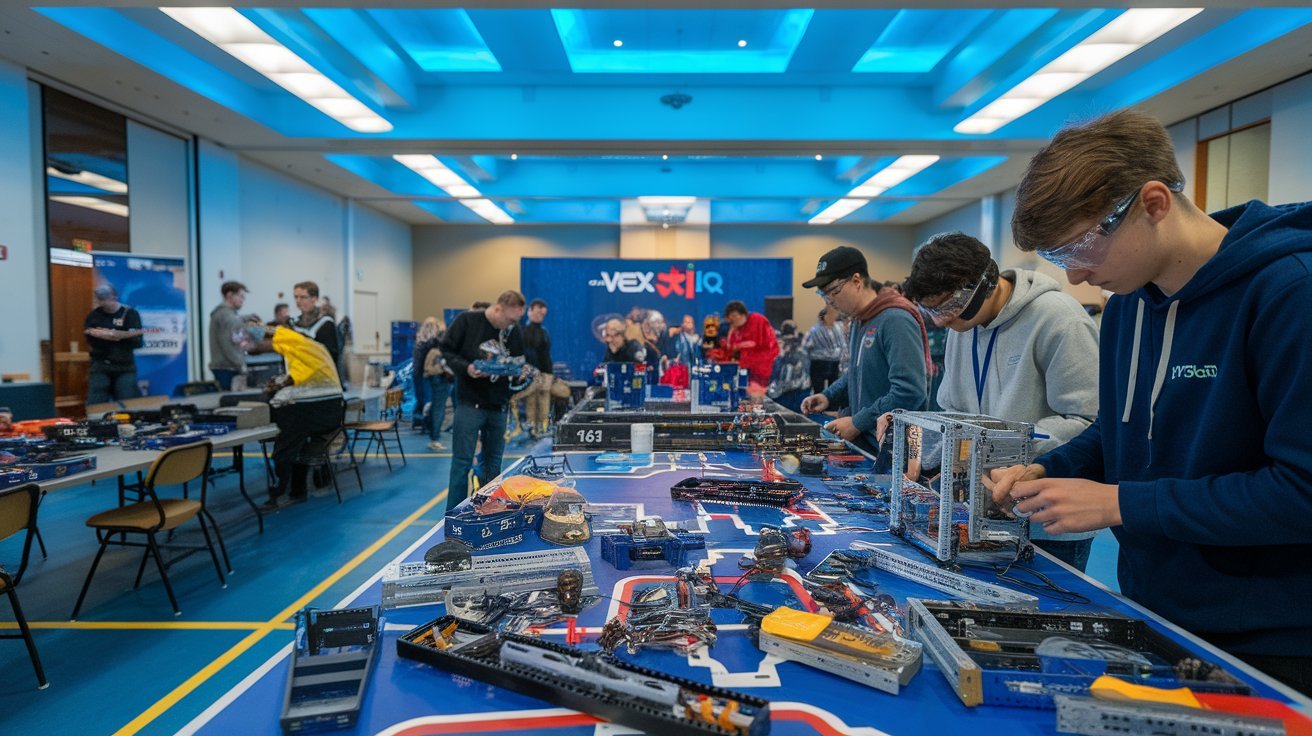
VEX IQ Mix & Match was the official 2025–2026 VEX IQ Robotics Competition (VIQRC) game. It challenged student teams to design, build, program, and drive robots while working with alliance partners to maximize their score. Unlike a simple robot-driving contest, Mix & Match emphasized strategy, precision, teamwork, stacking, planning, and adaptability.
The game was designed around the idea that the easiest game pieces for one robot could be more difficult for its partner to reach. As a result, teams had to communicate and coordinate their actions instead of relying entirely on an individual robot. VEX Robotics described Mix & Match as an execution-based challenge where both the quality and quantity of stacks mattered.
Although the 2025–2026 season has now been replaced by VEX IQ Level Up for 2026–2027, Mix & Match remains an important game for understanding VEX IQ competition strategy and robotics education.
What Is VEX IQ Mix & Match?
VEX IQ Mix & Match was a robotics competition game in which teams used VEX IQ robots to collect game pieces and build stacks on pins and goals. The central challenge was to create scoring opportunities efficiently while coordinating with an alliance partner.
The official game manual explains that Mix & Match was intentionally designed to encourage collaboration between teams. Different game pieces were positioned so that one robot might have easier access to pieces that were harder for its partner to obtain. This encouraged teams to develop complementary strategies rather than having both robots perform exactly the same task.
The game therefore rewarded teams that could answer several questions quickly:
- Which game pieces should each robot collect?
- Which scoring locations should each robot prioritize?
- How can the alliance create valuable patterns?
- How can drivers avoid interfering with one another?
- How can the team maintain scoring efficiency throughout the match?
These questions made strategy and communication just as important as mechanical design.
How Does Mix & Match Gameplay Work?
At its core, Mix & Match revolved around stacking Pins and creating scoring patterns. VEX Robotics’ educational material identifies Stacking Pins as the foundation of scoring and recommends that students practice this skill before attempting more complicated strategies.
Teams competed with robots that had to maneuver around the field, acquire game pieces, and place them accurately. The robot’s intake, drivetrain, lift or stacking mechanism, and programming could all influence performance.
The game also included Teamwork Matches and Robot Skills Challenges. In Teamwork Matches, two teams worked together as an alliance. This made communication particularly important because both robots had to use the available field space effectively.
The official curriculum for Mix & Match was structured around progressively learning the game. Students could first explore a virtual version, then build the Hero Bot, practice driving, learn scoring methods, develop strategies, and improve their robot.
The Hero Bot Huey and VEX IQ Robot Design
One of the easiest ways for new teams to learn Mix & Match was through Huey, the official Hero Bot. VEX’s Competition 101 curriculum uses Huey to introduce students to the game’s basic robot design, driving, coding, and strategy concepts.
Starting with a Hero Bot gives beginners an opportunity to understand how a robot interacts with the field before they attempt a highly customized competition design.
Experienced teams can then modify their robots to improve important characteristics such as:
Drivetrain performance: A responsive drivetrain helps drivers reach scoring locations quickly.
Intake design: An effective intake allows the robot to collect game pieces consistently.
Stacking mechanism: Precise placement is essential because scoring depends heavily on successful stacking.
Sensors: Sensors can improve autonomous accuracy and help robots detect objects or field conditions.
Programming: Autonomous routines can make repeated movements more consistent and reduce driver workload.
VEX IQ’s broader platform supports snap-together construction and includes motors, sensors, a Robot Brain, controller, and coding tools. VEXcode IQ supports Blocks, Python, and C++, giving students opportunities to progress from beginner programming to more advanced software development.
Best Strategies for VEX IQ Mix & Match
A successful Mix & Match team needed more than a fast robot. The most effective strategy began with understanding what the alliance could realistically accomplish during one match.
Teams could start by practicing individual scoring actions. VEX’s educational resources recommend breaking the game into its major scoring components before combining them into a complete strategy.
A practical strategy-development process includes:
- Learn the scoring system before designing the robot.
- Practice stacking until the action becomes consistent.
- Identify which field areas each robot can reach most efficiently.
- Assign complementary jobs to alliance partners.
- Measure how many scoring actions can realistically be completed.
- Test different routes and mechanisms.
- Use match data to determine which strategy performs best.
VEX’s Competition 101 curriculum specifically encourages students to develop a strategy, test it, collect data, and make collaborative decisions about what should be used in competition.
This data-driven approach can be more valuable than simply copying another team’s robot.
Coding and Skills Practice for Mix & Match
Programming was an important part of Mix & Match, particularly during Robot Skills activities. Teams could practice autonomous routines and refine their robot’s movements without relying entirely on driver control.
VEX also provided virtual skills environments for the 2025–2026 Mix & Match season. These included virtual driving and autonomous coding practice, allowing teams to work on strategies and programming even when a physical competition field was unavailable.
For students learning robotics, this is particularly useful because it separates programming problems from mechanical problems. A team can test a route virtually, identify inefficient movements, and then apply the lessons to its physical robot.
VEXcode IQ also makes the platform accessible to students with different programming experience levels. Beginners can start with block-based programming, while more advanced students can work with Python or C++.
What Students Learn From VEX IQ Mix & Match
The educational value of Mix & Match goes far beyond earning points. Students develop practical skills in engineering, computer science, mathematics, communication, leadership, problem-solving, and teamwork.
Building a robot teaches students about mechanical systems and iterative design. Programming teaches logical thinking and debugging. Competition introduces pressure, uncertainty, and the need to make decisions quickly.
Perhaps most importantly, Mix & Match encouraged students to understand that robotics is a team activity. The official game design intentionally encouraged alliance partners to help one another access different game pieces and create stronger scoring opportunities.
Students therefore had to communicate with drivers, programmers, builders, coaches, and alliance partners. They also learned that a robot that looks impressive is not necessarily the robot that performs best.
VEX IQ Mix & Match vs. the 2026–2027 Season
For anyone searching for VEX IQ Mix & Match in 2026, it is important to understand the season change. Mix & Match belonged to the 2025–2026 competition season, while the current 2026–2027 VEX IQ game is Level Up.
Level Up introduces a different challenge centered around scoring Bean Bags into Goals, with higher Goals offering more points. It also includes Teamwork and Robot Skills Challenges.
VEX currently lists Level Up Version 2.0, released in September 2026, as the active game-manual version. VEX’s competition manual schedule shows that additional updates are planned throughout the season.
That means Mix & Match is now best viewed as a previous-season game, educational resource, and strategy reference, while teams competing during the 2026–2027 season should follow the official Level Up manual and current Q&A rulings.
Why VEX IQ Mix & Match Still Matters
VEX IQ Mix & Match remains an excellent example of educational robotics built around strategy and collaboration. Its design required students to combine mechanical engineering, programming, driving skill, communication, and strategic thinking.
The game also demonstrates why successful competitive robotics is not simply about building the fastest or strongest robot. Teams must understand the rules, analyze scoring opportunities, test designs, communicate effectively, and continuously improve.
For students, coaches, and educators researching previous VIQRC seasons, Mix & Match provides valuable lessons in robot design and data-driven strategy. For teams preparing for the current 2026–2027 season, many of those same principles remain useful even though the official game has changed to Level Up.
Ultimately, the lasting lesson of VEX IQ Mix & Match is simple: successful robotics combines engineering with teamwork, experimentation, and smart decision-making. Those skills remain valuable long after a competition season ends.
Entertainment
NASCAR Museum: Complete Guide to the NASCAR Hall of Fame, Exhibits, History, and Visitor Experience

For anyone interested in American motorsports, few destinations offer a more complete look at stock-car racing than the NASCAR Hall of Fame. Located in downtown Charlotte, North Carolina, the museum celebrates the drivers, teams, mechanics, engineers, broadcasters, and personalities who helped shape NASCAR. It combines historic race cars and memorabilia with interactive exhibits that allow visitors to experience aspects of professional stock-car racing rather than simply viewing artifacts behind glass.
The NASCAR museum experience is especially appealing because NASCAR is more than a collection of famous drivers and spectacular races. Its history includes technological innovation, legendary rivalries, changing safety standards, unforgettable championships, and generations of fans. The Hall of Fame brings many of these stories together in one destination.
What Is the NASCAR Hall of Fame?
The NASCAR Hall of Fame is a museum and motorsports attraction dedicated to preserving and celebrating NASCAR’s history. It is located at 400 E. M.L.K. Jr Blvd in Charlotte, North Carolina, in the heart of a city widely associated with the American stock-car racing industry. NASCAR Hall of Fame
The facility is not simply a conventional sports museum. Its exhibits are designed to explain how NASCAR developed from its early roots into one of America’s best-known professional racing organizations. Visitors can explore historic vehicles, racing equipment, photographs, trophies, uniforms, and other artifacts connected with important moments in the sport.
The Hall of Fame also recognizes individuals whose achievements had a lasting impact on NASCAR. Drivers receive much of the attention, but the broader history of the sport includes owners, crew members, builders, engineers, officials, and other contributors. This wider perspective helps visitors understand why successful stock-car racing depends on an entire organization rather than a driver alone.
Why Charlotte Is Home to the NASCAR Museum
Charlotte has a particularly strong connection to NASCAR. The surrounding region became an important center for stock-car racing, with numerous racing teams, workshops, suppliers, and motorsports professionals establishing operations throughout North Carolina.
That connection makes Charlotte a natural home for the Hall of Fame. Visitors can combine a trip to the museum with other motorsports-related experiences in the region, making the city an important destination for racing enthusiasts.
The location also reflects NASCAR’s development in the southeastern United States. Early stock-car racing grew from regional competition into a nationally recognized professional sport, and the Charlotte area played an important role in that transformation.
For dedicated fans, visiting the NASCAR Hall of Fame in Charlotte can therefore feel like more than a standard museum trip. The surrounding racing culture provides additional context for what visitors see inside.
Major NASCAR Museum Exhibits and Attractions
One of the strongest features of the museum is its combination of historic artifacts and interactive displays. Traditional museum exhibits can explain what happened, but interactive attractions can help visitors understand what it feels like to participate in racing.
Race cars are among the biggest attractions. Seeing a competition vehicle in person reveals details that photographs cannot fully communicate, including its proportions, aerodynamic components, interior layout, and mechanical design. Historic cars can also help demonstrate how racing technology changed over different eras.
The museum’s exhibits also explore the evolution of NASCAR itself. Visitors can learn about famous competitors, championship seasons, team achievements, technical developments, and moments that changed the direction of the sport.
Interactive experiences add another dimension. Racing simulators and hands-on displays allow visitors to engage with concepts such as driving technique, speed, strategy, and vehicle control. These attractions can be particularly enjoyable for families because they provide an opportunity to participate rather than simply observe.
The NASCAR Hall of Fame and Racing History
The history preserved at the museum stretches across generations. NASCAR’s development involved dramatic changes in vehicle engineering, track design, driver preparation, safety equipment, sponsorship, television coverage, and competition strategy.
Early stock cars looked considerably different from modern race cars, and the technology used by teams has evolved dramatically. Engineers have continually worked to improve aerodynamics, suspension, engines, tires, cooling systems, and safety structures.
The museum provides an opportunity to see this evolution through physical artifacts. Instead of reading about technological changes in isolation, visitors can compare vehicles and equipment from different periods and recognize how dramatically the sport has developed.
The Hall of Fame component is equally important. NASCAR’s greatest figures are remembered not only for winning races but also for their influence on the sport. Their careers can illustrate different eras of NASCAR and demonstrate how racing styles, team structures, and competitive strategies changed over time.
Interactive Experiences for Racing Fans
A major advantage of the NASCAR museum is its emphasis on hands-on experiences. This helps make the attraction accessible even to visitors who may not know every NASCAR driver or historical statistic.
A racing simulator, for example, can introduce visitors to the challenges involved in controlling a high-performance stock car. Maintaining speed, choosing racing lines, responding to other vehicles, and managing concentration all become more understandable when visitors experience a simulation themselves.
Interactive displays can also help explain technical subjects that might otherwise seem complicated. Aerodynamics, pit strategy, vehicle setup, and race-day decision-making become easier to understand when presented visually.
These attractions make the museum suitable for different types of visitors. A lifelong NASCAR fan can investigate detailed historical information, while someone discovering the sport for the first time can use the interactive exhibits as an introduction.
Planning a Visit to the NASCAR Museum in 2026
Visitors planning a NASCAR Hall of Fame trip in 2026 should check the official visitor information before traveling because opening hours, ticket policies, special events, and exhibit availability can change. The museum currently lists regular operating hours of approximately 10 a.m. to 5 p.m. on operating days, according to current business information. NASCAR Hall of Fame
Allowing several hours for a visit is sensible if the goal is to explore the exhibits carefully rather than making a quick stop. Racing enthusiasts may want additional time for interactive attractions, historical displays, photography, and the Hall of Fame sections.
It can also be useful to check for special events, educational programs, and temporary exhibits before visiting. These activities can add something different to the standard museum experience.
Because the attraction is in downtown Charlotte, visitors should also consider parking, traffic, nearby restaurants, and other attractions when building an itinerary. Checking official information shortly before departure is the best way to confirm current details.
Who Should Visit the NASCAR Museum?
The NASCAR Hall of Fame is an obvious choice for dedicated stock-car racing fans, but its appeal extends beyond longtime followers of the sport. Families, tourists, automotive enthusiasts, students, and people interested in American sports history can all find something worthwhile.
Children may particularly enjoy the interactive components, while serious racing fans can spend more time studying historic cars and learning about legendary figures. Automotive enthusiasts may also appreciate the engineering side of the exhibits, especially the evolution of vehicle technology.
The museum can therefore work for both casual and highly knowledgeable visitors. Someone who knows little about NASCAR can leave with a clearer understanding of the sport, while an experienced fan can use the exhibits to revisit important moments and explore details that are difficult to appreciate through television coverage alone.
Why the NASCAR Museum Is Worth Visiting in 2026
The NASCAR Hall of Fame provides a rare combination of motorsports history, technology, entertainment, and interactive learning. Its collection demonstrates how NASCAR developed from its early days into a sophisticated professional racing organization, while its Hall of Fame honors the people whose achievements helped create that history.
What makes the experience particularly compelling is the physical connection to racing. Historic cars, equipment, photographs, trophies, and other artifacts make the sport’s history tangible. Interactive attractions then allow visitors to experience selected aspects of racing for themselves.
For anyone planning a motorsports-focused trip to Charlotte, the NASCAR museum deserves a place near the top of the itinerary. Whether the goal is to learn about legendary drivers, examine historic race cars, understand NASCAR engineering, or simply enjoy an engaging day surrounded by racing history, the Hall of Fame offers an experience that goes well beyond a conventional museum visit.
With its combination of history, technology, competition, and interactive entertainment, the NASCAR Hall of Fame remains one of the most significant destinations for understanding America’s stock-car racing heritage in 2026.

The Blue Orange Gobblet Junior game is a quick, colorful strategy board game that puts a clever twist on traditional tic-tac-toe. Designed for two players, the game combines simple rules with memory, planning, spatial awareness, and the unusual ability to cover or “gobble” smaller pieces. Although the game is commonly searched as “Gobblet Junior,” Blue Orange’s current product is Gobblet Gobblers, which evolved from the earlier Gobblet Junior design. Blue Orange’s own history explains that Gobblet Jr. was introduced in 2003 on a smaller 3×3 grid, while Gobblet Gobblers later gave the concept a playful character-based redesign.
For families looking for a first strategy game for children, Gobblet Gobblers remains appealing because a complete match can take only 2–5 minutes, while the decisions become more challenging as players learn to remember which pieces are hidden underneath others. The official Blue Orange description lists the game for ages 5 and up and two players.
What Is the Blue Orange Gobblet Junior Game?
The Gobblet Junior concept is essentially a three-dimensional version of tic-tac-toe. Instead of simply placing identical-sized X and O markers onto a flat grid, players use differently sized pieces that can cover smaller pieces. This creates a constantly changing board in which a move can reveal something that was previously hidden.
The current Gobblet Gobblers edition uses a colorful, character-based design. Blue Orange describes it as an easy-to-learn strategy game in which players try to line up three of their Gobblers while also using larger pieces to cover smaller opposing pieces.
The game is particularly interesting because the visible board does not always tell the whole story. A large blue Gobbler may appear to occupy a space, but an orange Gobbler could be hidden underneath it. Therefore, players need both strategic thinking and memory.
The result is a game that feels simple enough for young children to learn but contains enough uncertainty and planning to remain interesting for adults.
Blue Orange Gobblet Gobblers Pieces and Contents
The official rules list 12 Gobblers, consisting of 6 blue and 6 orange pieces, along with the components needed to build the playing grid. The current Blue Orange product page similarly lists one wooden grid, 12 Gobblers, and illustrated rules.
Each player chooses a color and controls six pieces. The pieces come in different sizes, allowing larger Gobblers to cover smaller ones.
The original rules emphasize that a player can place a new Gobbler on an empty space or over a smaller Gobbler. A player can also move one of their existing Gobblers to another suitable location.
The current product line has also included a plastic version alongside the wooden version. Blue Orange’s 2025 catalog describes the plastic edition as a lighter, easy-to-clean alternative using the familiar blue and orange colors.
The classic wooden edition, however, is particularly attractive for families who enjoy tactile board games and traditional game pieces.
How to Play Gobblet Junior and Gobblet Gobblers
The objective is straightforward: be the first player to get three of your pieces in a row. The three pieces can form a horizontal, vertical, or diagonal line on the 3×3 grid. The official rules compare the objective directly with tic-tac-toe.
Players take turns. On a turn, a player can either:
- Place a new Gobbler onto an empty space or over a smaller Gobbler.
- Move one of their Gobblers already on the board to an empty space or over a smaller Gobbler.
A key rule is that once a player touches a Gobbler that is already on the board, they must move it.
The most important mechanic is size. A larger Gobbler can cover a smaller one, effectively removing the smaller piece from view while keeping it underneath. The official rules also specify that a Gobbler can cover any smaller-sized Gobbler, rather than only the immediately smaller size.
This changes everything compared with ordinary tic-tac-toe.
Why Memory and Strategy Matter So Much
At first glance, Gobblet Gobblers may appear to be a simple children’s game. However, the hidden pieces introduce a strong memory component.
Imagine that a player places a large blue Gobbler over a small orange Gobbler. The orange piece has not disappeared; it is still underneath. Later, if the blue Gobbler moves, the orange piece can be revealed. A player who forgets what is underneath may accidentally uncover an opponent’s winning opportunity.
This means that successful players need to remember which pieces are covering which spaces.
The official strategy tips specifically encourage players to think about what is underneath a piece before moving it and to pay attention to the opponent’s actions. The rules also point out that players can gobble their own pieces, creating additional strategic possibilities.
For children, this can naturally encourage observation, concentration, planning, and memory without making the experience feel like a formal learning exercise.
Best Gobblet Gobblers Strategies for Beginners
Winning at Blue Orange Gobblet Gobblers requires more than simply placing pieces wherever a line seems possible. A strong beginner strategy starts with paying attention to the entire board.
First, avoid focusing exclusively on your own three-in-a-row opportunity. Watch your opponent’s potential line as well. A player may appear to have only two pieces in a row, but a hidden piece could completely change the position.
Second, do not automatically use your largest Gobbler immediately. The official rules specifically note that players do not have to start with their bigger pieces.
Third, remember what is hidden underneath larger pieces. A powerful Gobbler can protect a position, but moving it may reveal an opponent’s piece and unexpectedly change the board.
Finally, think ahead before every move. Because pieces can be moved and covered, a position that looks safe can change very quickly.
Skills Children Can Develop With Gobblet Gobblers
One reason the Gobblet Junior game is popular with families is that it combines entertainment with several useful cognitive and motor skills. Blue Orange identifies strategy, memory, fine motor skills, and analysis among the game’s skills.
The European Blue Orange product page also highlights focus and attention, memory, problem solving, and visual perception.
During play, children must observe the board, remember hidden pieces, anticipate possible moves, and decide whether to attack or defend. Moving the physical Gobblers also involves hand-eye coordination and fine motor control.
The game can additionally teach practical social skills such as taking turns, accepting wins and losses, following rules, and communicating respectfully.
Because matches are short, children can quickly play again and experiment with different strategies.
Gobblet Junior vs. Gobblet Gobblers
The names can cause confusion because Gobblet Junior and Gobblet Gobblers are closely related versions of the same broader game concept. Blue Orange’s own history records the evolution from Gobblet to Gobblet Jr. and then to Gobblet Gobblers. Gobblet Jr. used a smaller 3×3 grid, making the game more accessible to younger players, while Gobblet Gobblers introduced the familiar silly character designs and tic-tac-toe-style board.
The current Blue Orange product is marketed as Gobblet Gobblers, with ages 5+, two players, a 2–5 minute play time, and a wooden grid with 12 Gobblers.
Therefore, someone searching for the Blue Orange Gobblet Junior game today may actually be looking for Gobblet Gobblers or information about the earlier Gobblet Jr. version.
Frequently Asked Questions About Blue Orange Gobblet Junior
What age is Gobblet Gobblers for?
The official Blue Orange game is recommended for ages 5 and up and is designed for two players.
How long does Gobblet Gobblers take to play?
A typical game takes approximately 2–5 minutes, although the actual duration can vary depending on how quickly players make decisions.
How many pieces are included?
The game includes 12 Gobblers: six blue and six orange.
Can a large Gobbler cover a small opponent’s piece?
Yes. Larger Gobblers can cover smaller Gobblers, which is the game’s defining strategic mechanic.
Can you cover your own Gobbler?
Yes. The official strategy guidance specifically states that players can gobble their own pieces.
Is Gobblet Gobblers just tic-tac-toe?
It is based on the familiar three-in-a-row concept, but the ability to move pieces and cover smaller pieces makes it substantially more strategic than ordinary tic-tac-toe.
Conclusion
The Blue Orange Gobblet Junior game, now best known through the Gobblet Gobblers edition, is an excellent example of how a familiar game concept can be transformed into something more strategic and engaging. Its three-in-a-row objective is easy to understand, but the ability to move pieces, cover smaller Gobblers, and remember hidden pieces adds an entirely new layer of decision-making.
With 12 colorful pieces, a 3×3-style playing concept, two-player gameplay, short 2–5 minute matches, and an age recommendation of 5+, it is particularly well suited to children who are ready to move beyond basic matching and simple board games.
Most importantly, the game makes memory, strategy, focus, problem solving, and planning feel like part of the fun rather than a formal lesson. Whether we call it Gobblet Junior or Gobblet Gobblers, the central idea remains clever: line up three, remember what is hidden, and know when to gobble. That combination is what gives this Blue Orange game its lasting appeal for both children and parents.

Replace Filter Whirlpool: A Complete 2026 Guide to Changing Whirlpool Filters

Noilly Prat: Complete Guide to French Vermouth in 2026

Air Jordan 14 Retro Black University Blue: 2026 Release, Price, Design and Complete Guide

FitFlop: The Ultimate Guide to Comfortable, Stylish, and Supportive Footwear

Hart Bochner: Biography, Movies, TV Shows, Directing Career, and Lasting Hollywood Legacy

Kacy Byxbee: Everything to Know About the Costume Designer, Career, Relationship, and Private Life
 Fashion3 months ago
FitFlop: The Ultimate Guide to Comfortable, Stylish, and Supportive Footwear
- Celebrity3 months ago
Hart Bochner: Biography, Movies, TV Shows, Directing Career, and Lasting Hollywood Legacy
- Celebrity3 months ago
Kacy Byxbee: Everything to Know About the Costume Designer, Career, Relationship, and Private Life
- Celebrity3 months ago
Paula Gosselaar: The Life, Family Background, and Influence Behind Mark-Paul Gosselaar’s Success
- Celebrity3 months ago
Barbara Cameron: Biography, Career, Achievements, and Lasting Legacy
- Celebrity3 months ago
Hilary Gumbel: Everything to Know About Bryant Gumbel’s Wife, Career, Family, and Private Life
- Celebrity3 months ago
Susan Duff: A Look at Her Life, Family, Career, and Lasting Legacy
- Celebrity3 months ago
Bill Cusack: A Comprehensive Look at His Career, Influence, and Lasting Legacy